

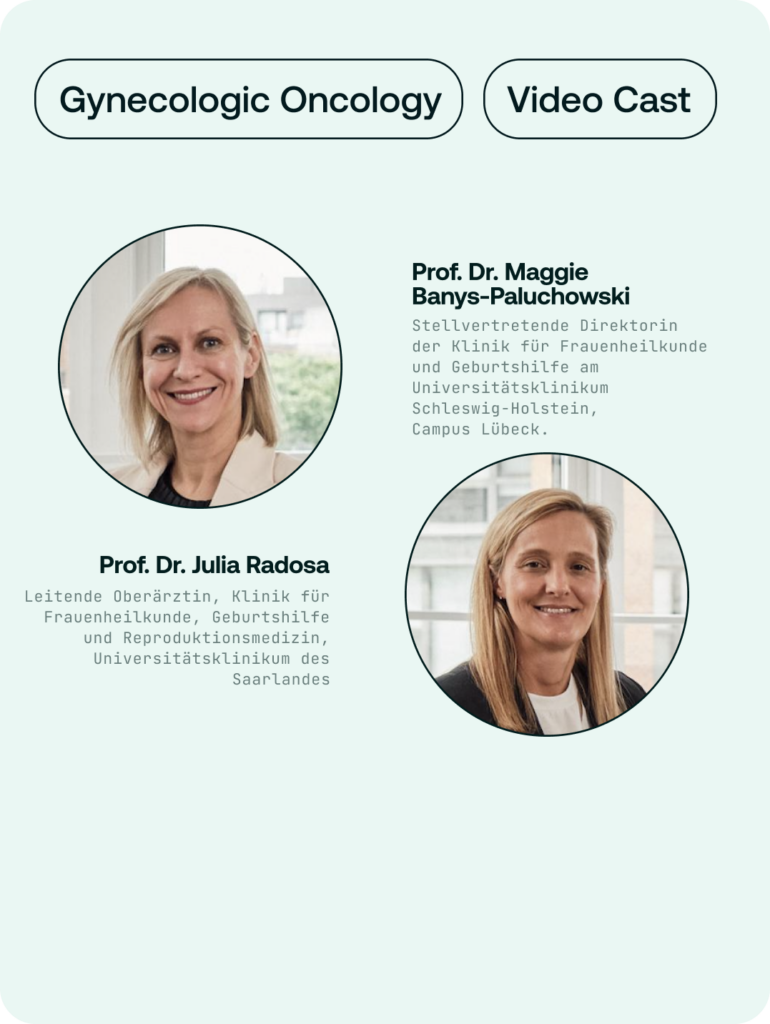
This Medudy course is a video podcast for physicians on
the topic “Early-Stage Breast Cancer – Highlights from ASCO 2026”.
Prof. Dr. Maggie Banys-Paluchowski (gynecologist, Lübeck) and Prof. Dr. Julia Radosa
(Hamburg) summarize the most important studies from the Oral Abstract Session on early-
breast cancer.
In the surgical field, the AXANA study (axillary surgical techniques following
neoadjuvant chemotherapy), the SENOMAC study (omission of complete
axillary dissection), and the PREPEC study (pre- vs. subpectoral implant placement) are discussed.
For systemic therapies, the focus is on the OPTIMA study (genomic testing, Prosigna), the
lidERA study (oral SERD giredestrant), and the 7-year follow-up of the
KEYNOTE-522 study (pembrolizumab in triple-negative breast cancer).
Note: All content is based on high-quality scientific sources and is created and reviewed by the Medudy medical team
.
Learning Objectives:
By the end of this training session, you will be familiar with:
– the results of the AXANA study and the significance of tumor biology for complete pathological axillary remission following neoadjuvant chemotherapy.
– the implications of the SENOMAC study for omitting complementary axillary dissection in cases of 1–2 involved sentinel lymph nodes.
– the findings of the PREPEC study comparing pre- vs. subpectoral implant placement in terms of patient satisfaction and complication rates.
– the role of genomic tests (OPTIMA/Prosigna) in guiding chemotherapy decisions, including for premenopausal patients with nodal involvement.
– the significance of the oral SERD giredestrant (lidERA) and the updated long-term data from the KEYNOTE-522 study in triple-negative breast cancer.